How the Industry Has Evolved
A few years ago, getting access to a funded account was often the main selling point for prop firms. Today, traders expect much more than that.
Modern prop firms are investing in better trading platforms, educational content, performance analytics, and risk management tools. The goal is simple: to give traders an environment where they can learn, improve, and trade more efficiently.
This shift reflects a broader trend: firms are increasingly focused on building long-term relationships with traders rather than offering a single evaluation.
The Rise of Prop Firms
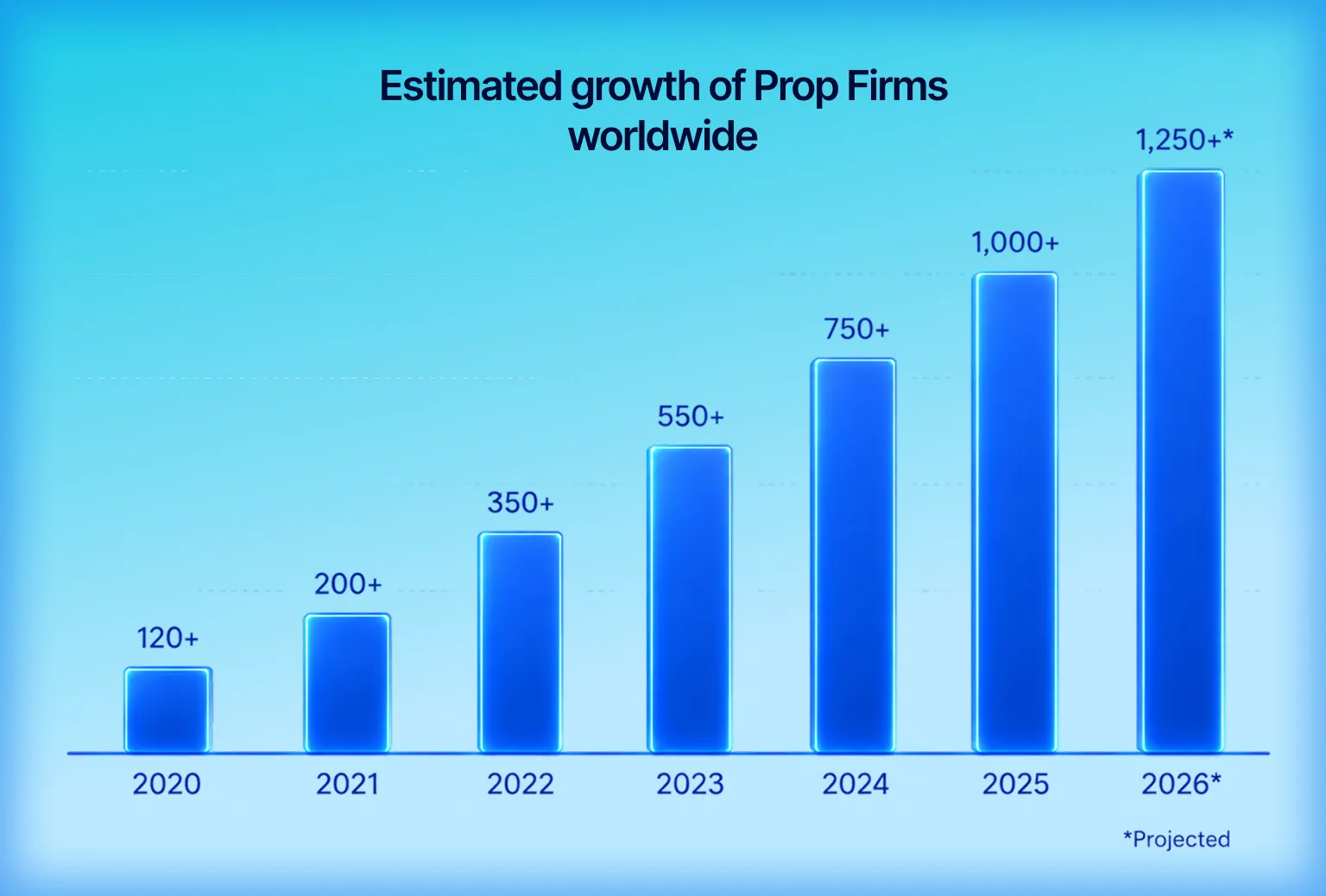
The number of funded trading companies has grown rapidly over the past several years, driven by several important developments. Growing interest in financial markets, easier access to online trading, the rise of remote-first business models, advances in trading technology, and increasing demand for alternatives to traditional brokerage accounts have all contributed to the industry’s expansion.
As more firms enter the market, competition is no longer based solely on funding opportunities. Instead, firms increasingly differentiate themselves through technology, transparency, educational resources, and the overall trader experience.
The Changing Business Model
The most successful prop firms are evolving beyond the traditional model of simply providing funded accounts.
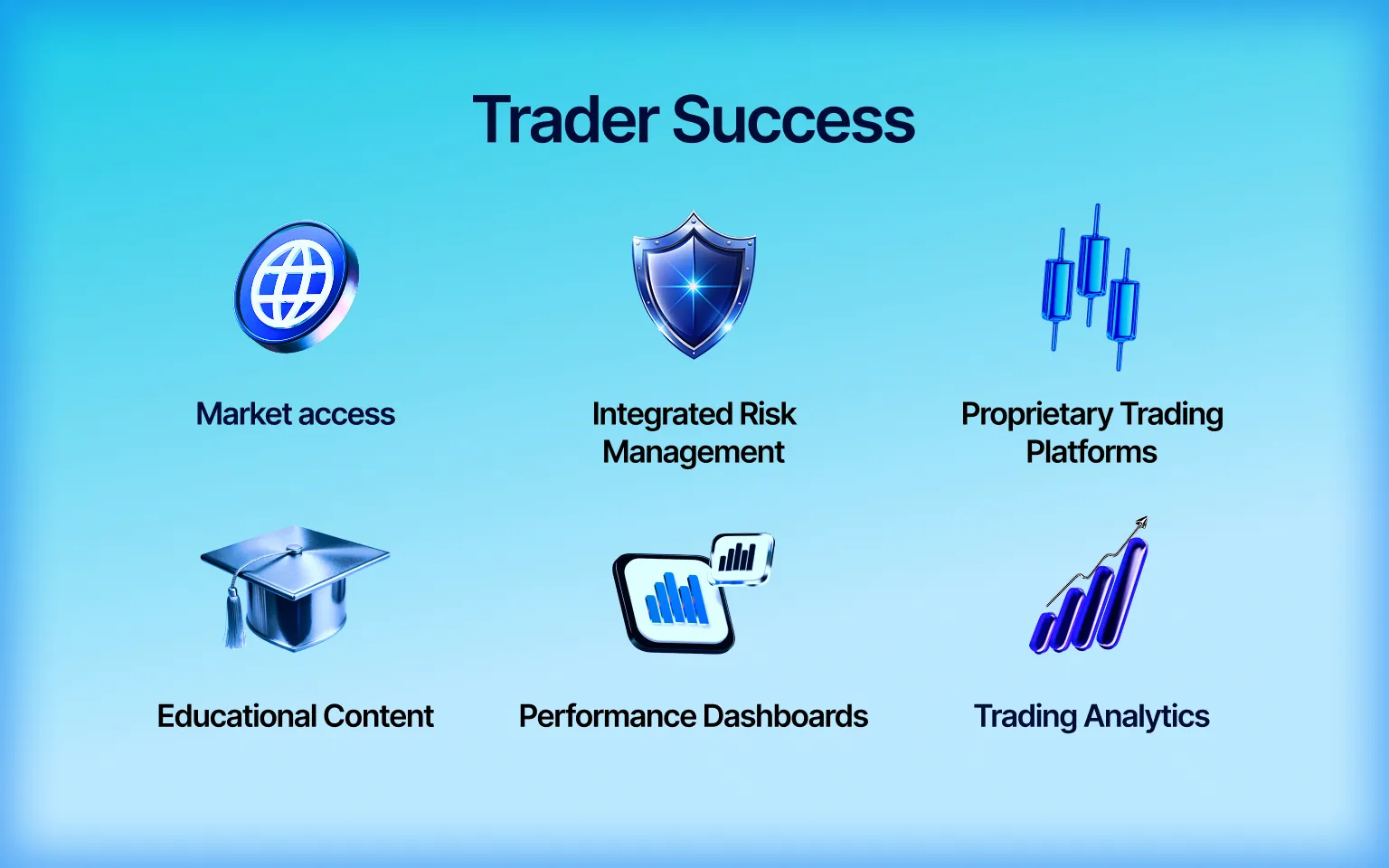
Rather than focusing solely on the evaluation process and capital allocation, many firms are building comprehensive trading ecosystems designed to support traders throughout their entire journey. These ecosystems bring together market access, educational resources, trading analytics, performance dashboards, integrated risk management tools, and proprietary trading platforms within a single environment.
The objective is to create a more seamless and efficient trading experience, allowing traders to analyze markets, execute trades, monitor their performance, and continue developing their skills without relying on multiple disconnected tools. This shift reflects a broader industry trend in which long-term trader development, technology, and user experience have become just as important as access to capital itself.
AI Is Reshaping Prop Trading
Artificial intelligence is becoming an increasingly important part of the trading industry.
While AI is unlikely to replace human decision-making entirely, it is changing how traders analyze markets and how firms support their clients. Common applications include:
- identifying market patterns;
- analyzing historical trading performance;
- detecting unusual trading behavior;
- improving customer support through AI assistants;
- personalizing educational content.
For traders, AI can help organize information more efficiently. However, successful trading still depends on judgment, discipline, and effective risk management.
Regulation Is Becoming More Important
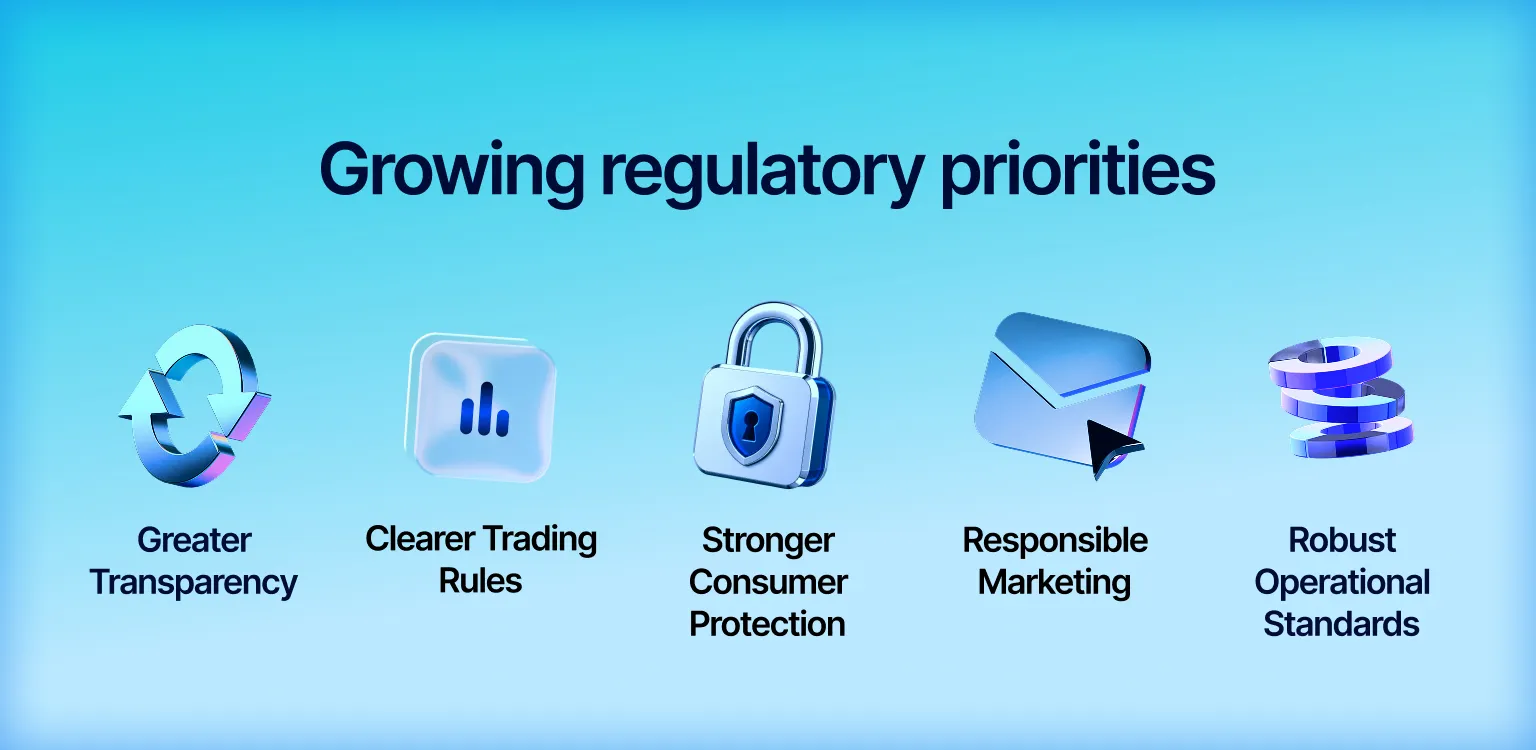
As the industry expands, regulators in different jurisdictions are paying closer attention to funded trading businesses. Although regulatory approaches vary, several themes are becoming increasingly important:
- greater transparency;
- clearer communication of trading rules;
- stronger consumer protection;
- responsible marketing;
- robust operational standards.
For traders, this means it is increasingly important to choose firms that communicate their rules clearly and operate transparently.
Advantages of Prop Trading
Prop trading offers several potential benefits.
Access to Larger Capital
One of the biggest advantages of prop trading is the opportunity to trade with significantly more capital than many individuals could comfortably invest on their own. Instead of committing substantial personal savings, traders who successfully complete an evaluation can gain access to funded accounts that allow them to pursue larger market opportunities.
This can make it possible to scale a trading strategy while limiting the amount of personal capital at risk.
Structured Risk Management
Most prop firms require traders to operate within clearly defined risk parameters: maximum daily losses, overall drawdown limits, and position management rules. They seem limited for a reason: they are designed to encourage disciplined trading habits and consistent decision-making.
For many traders, working within a structured framework helps develop stronger risk management skills that remain valuable throughout their trading careers.
Learning Opportunities
Many modern prop firms provide far more than just funding. Educational resources, webinars, trading guides, market commentary, and performance analytics become standard features.
These resources help traders refine their strategies, better understand market behavior, and learn from both successful and unsuccessful trades. Continuous learning plays an important role in long-term trading development, making educational support a valuable part of the overall experience.
Professional Trading Environment
Today’s leading prop firms are investing in technology that creates a more professional trading experience. Modern proprietary platforms often combine market analysis, order execution, account monitoring, performance tracking, economic calendars, and risk management tools within a single workspace. It allows traders to spend less time switching between different applications and more time focusing on trading itself.
Challenges of Prop Trading
Even though prop trading offers many opportunities, there are some challenges that traders should pay attention to. Seeing these limitations results in realistic expectations and encourages a more disciplined approach to trading.
Evaluation Requirements
Before receiving access to a funded account, most prop firms require traders to complete an evaluation or challenge. These assessments are designed to measure consistency, profitability, and risk management rather than rewarding a single successful trade. Completing an evaluation requires demonstrating the ability to trade within strict rules.
Risk Rules
Funded accounts typically include strict trading rules. These rules are intended to protect both the trader and the firm, but they also require careful planning and disciplined execution.
Traders who ignore risk parameters may lose access to their funded accounts, even if their overall trading strategy is profitable.
Emotional Pressure
A funded account can create additional psychological pressure for newer traders. Knowing that performance is being evaluated and that rule violations may have consequences can lead to emotional decisions.
Firm Quality Varies
Differences in evaluation models, trading platforms, transparency, customer support, educational resources, and business practices can significantly affect the trader’s experience. Before committing to any program, research the firm’s reputation, carefully review its trading rules, and understand exactly how its funding model works.
How to Choose a Prop Firm
Choosing a prop firm involves much more than comparing advertised account sizes. Consider the following questions:
- Are the evaluation rules clearly explained?
- Does the platform support your trading style?
- Are risk management policies transparent?
- What educational resources are available?
- Is customer support responsive?
- Does the company continue improving its technology?
- Does the firm’s business model appear sustainable?
It is better to consider overall trading experience and different features rather than focusing on a single one.