

Key Takeaways
The SabioTrade Challenge is a structured simulated trading evaluation. The most important principles are the following:
- The objective is not simply to make money. You must also follow the rules.
- The standard performance target is generally 10%.
- The daily loss limit is generally 5%.
- The maximum trailing drawdown is generally 6%.
- The 55% consistency threshold can affect the required profit target.
- A single large trading day or trade can increase the required target profit to maintain the 55% consistency rule.
- The evaluation has no fixed deadline under the stated standard conditions, but inactivity rules may apply.
- Risk management is more important than trading aggressively.
- Understanding the rules before trading can prevent avoidable failures.
- The best evaluation strategy is usually a repeatable process with controlled risk.
The SabioTrade Challenge is a simulated trading evaluation designed to assess a trader’s ability to reach a performance target while respecting predefined risk limits. The evaluation uses a single-step structure: traders select an account, trade in a simulated environment, and work toward the required profit target without violating the daily loss limit or maximum trailing drawdown.
The most important rules include:
- 10% performance target on standard plans;
- 5% daily loss limit;
- 6% maximum trailing drawdown;
- a 55% consistency threshold for individual trades and trading days;
- no fixed deadline, although accounts can become inactive after 30 days without trading;
- simulated trading rather than trading with real capital;
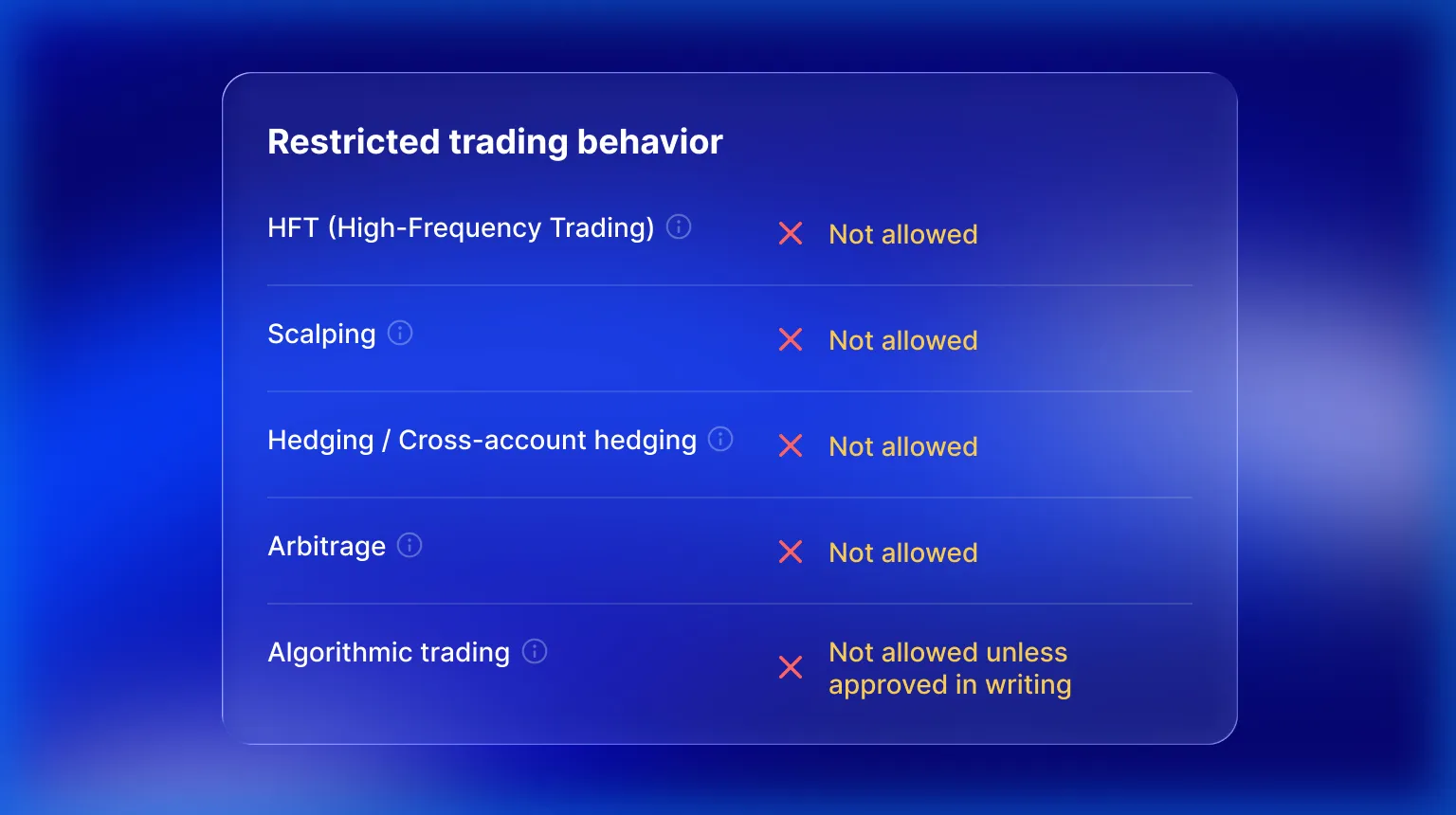
- restrictions on certain strategies, including high-frequency trading, hedging, mirror trading, and all-in trading.
Trader’s goal during the evaluation is to be consistent while delivering the results and maintain disciplined risk management.
Important: Evaluation conditions can vary by account type and may change. Traders should always verify the exact rules displayed for their selected plan and in their account dashboard.
How Does the SabioTrade Challenge Work?
The SabioTrade Challenge works as a simulated trading evaluation based on strict rules.

A trader chooses an evaluation plan, receives a simulated account balance, and attempts to reach the required performance target. At the same time, the trader must avoid exceeding the daily loss limit and maximum trailing drawdown.
For standard plans, the core structure is generally:
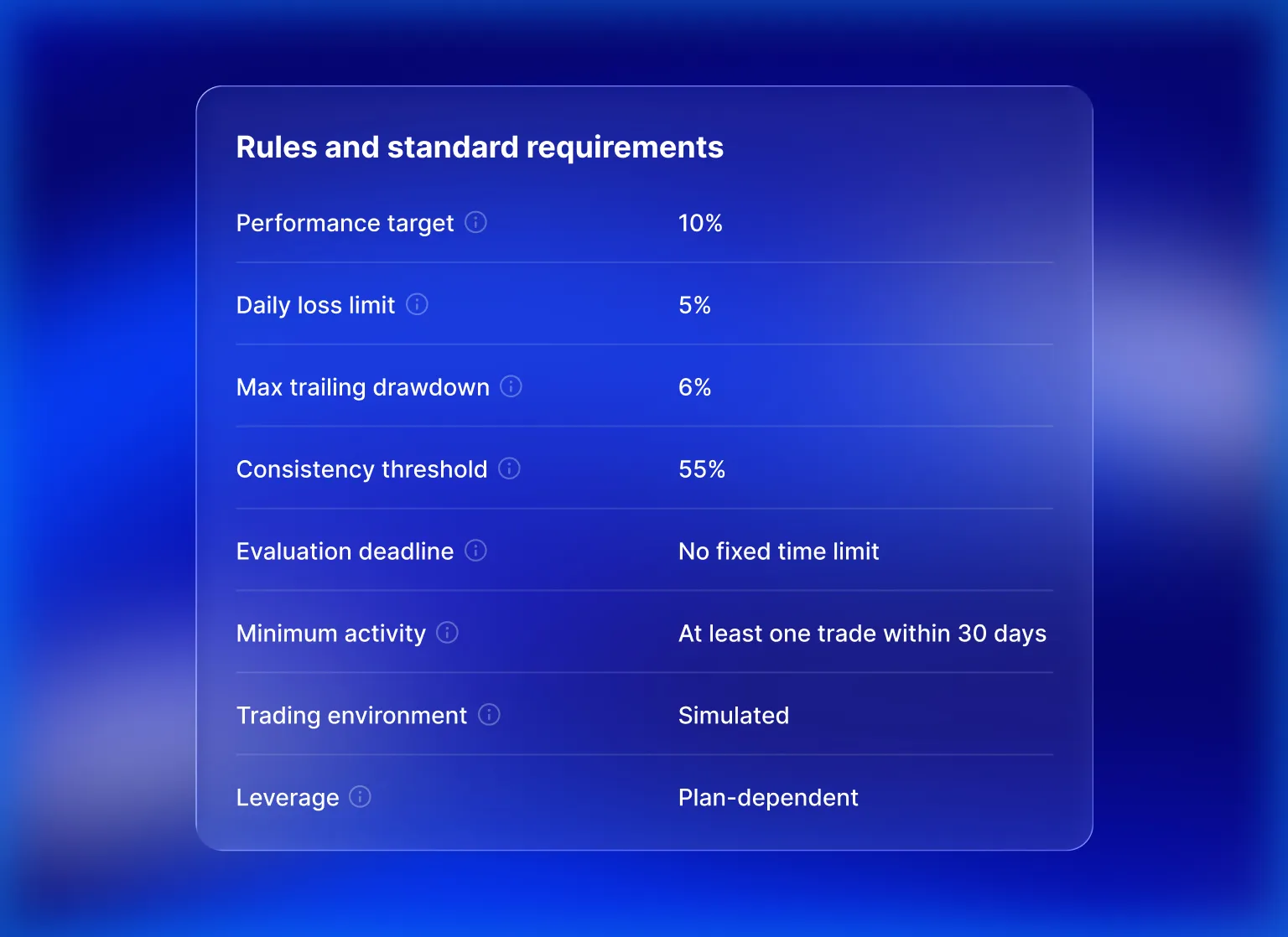
For example, on a $20,000 simulated account:
- the performance target is approximately $2,000;
- the daily loss limit is approximately $1,000;
- the maximum trailing drawdown is approximately $1,200.
These figures are examples based on percentage rules. The exact calculation method and account conditions should always be checked in the relevant plan documentation.
What Is a Prop Firm?
A proprietary trading firm, commonly called a “prop firm”, provides traders with access to a structured trading program. Traditionally, prop firms used their own capital to trade financial markets.
Modern online prop trading programs often use a different model. A trader first completes an evaluation in a simulated environment. The trader must demonstrate profitability and risk control according to the firm’s rules.
A typical prop firm evaluation includes:
- Account selection
- Payment of an evaluation fee
- Simulated trading
- Profit or performance target
- Risk limits
- Evaluation of trading behaviour
- Progression to a reward or performance account if the conditions are met
The important point is that passing a prop firm challenge is not just generating the highest possible return. A trader can make money and still fail if:
- the daily loss limit is exceeded;
- the maximum drawdown is breached;
- a prohibited strategy is used;
- trading activity violates the firm’s rules;
- profits become excessively concentrated in one trade or one day.
This is why a prop firm evaluation is best understood as a risk-adjusted performance test.
How SabioTrade Works
The SabioTrade model is built around a structured evaluation process.
Step 1: Choose an Evaluation Plan
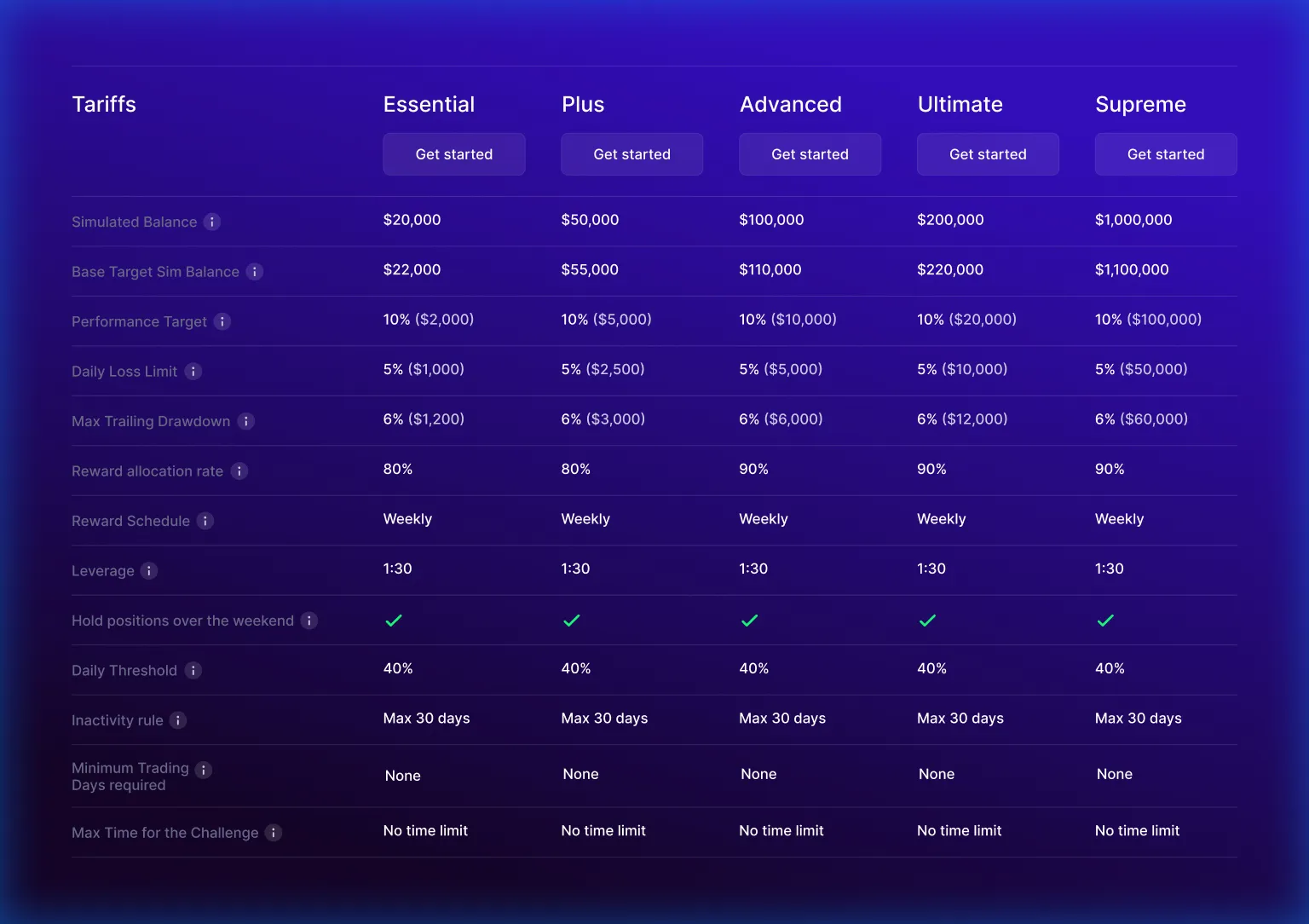
The trader selects a plan based on the simulated balance and account conditions. Available account sizes may include plans such as:
- $20,000;
- $50,000;
- $75,000 × 2;
- $100,000;
- $200,000;
- $650,000;
- $1,000,000.
The available plans, pricing, and exact conditions may change over time, so traders should check the current plan details before purchasing an evaluation.
Step 2: Trade in a Simulated Environment
The trader’s goal is to demonstrate trading skills while following the rules of the selected account in a simulated trading environment. This means that the evaluation is primarily testing:
- strategy execution;
- risk management;
- discipline;
- consistency;
- ability to control losses;
- ability to follow predefined conditions.
Step 3: Reach the Performance Target
For standard plans, the performance target is generally 10% of the initial simulated balance. For example:
| Simulated Balance | 10% Target |
| $20,000 | $2,000 |
| $50,000 | $5,000 |
| $100,000 | $10,000 |
| $200,000 | $20,000 |
The target is based on the account’s initial balance.
Step 4: Respect the Risk Rules
Reaching the target is not enough. The trader must also remain within:
- the 5% daily loss limit;
- the 6% maximum trailing drawdown;
- the 55% consistency threshold.
A trader who violates the daily loss limit or trailing drawdown will have the account automatically closed and will therefore be unable to reach the target. If a trader exceeds the 55% consistency threshold, however, the account remains active, and the target profit is adjusted accordingly, allowing the trader to continue trading toward the new target.
How the SabioTrade Evaluation Works
The evaluation can be understood as a balance between performance and survival. A trader must move the account upward without allowing losses to cross predefined boundaries.
The basic objective:
Reach the profit target while staying inside the risk limits.
A simplified example:
Initial Balance
      │
      ▼
Trade the Evaluation
      │
      ├── Reach 10% target? ── Yes
      │
      ├── Daily loss below 5%? ── Yes
      │
      ├── Trailing drawdown below 6%? ── Yes
      │
      ├── Consistency requirements satisfied? ── Yes
      │
      ▼
Evaluation Completed
The most common mistake is to focus exclusively on the target.
The fundamental thinking is the following:
“How can I reach the target while keeping the probability of breaching a risk limit low?”
What Can Cause Disqualification?
An evaluation may end if a trader:
- Exceeds the daily loss limit.
- Breaches the maximum trailing drawdown.
- Violates the 55% consistency rule, resulting in an adjusted profit target.
- Uses prohibited trading strategies, such as high-frequency trading, mirror trading, or all-in trading.
- Engages in hedging or cross-account hedging where prohibited.
- Exploits technical errors, latency, or platform issues.
- Uses unauthorized automated trading systems, where restricted.
- Fails to meet the minimum account activity requirements.
Always review the specific terms and conditions for your selected evaluation plan, as account rules and permitted trading activities may vary.
SabioTrade Challenge Rules Explained
1. Profit Target
The performance target is the amount of profit required to complete the evaluation. For standard plans, the target is generally 10% of the initial simulated balance.
Example: $50,000 Evaluation
- Initial simulated balance: $50,000
- Performance target: 10%
- Required profit: $5,000
The trader needs to reach the required target without breaching the other evaluation rules.
Why the Profit Target Can Be Misleading
A 10% target may appear simple. However, the target must be considered together with the drawdown limits. For example:
- target: 10%;
- maximum trailing drawdown: 6%.
This means that the trader cannot simply risk large amounts to reach the target quickly. The account must survive the path to the target.
2. Daily Loss Limit
The daily loss limit restricts how much the account can lose during a single trading day. For standard plans, the daily loss limit is generally 5%.
Example: $20,000 Account
5% of $20,000 = $1,000.
A trader should therefore avoid allowing the account’s daily loss to reach the applicable limit.
Why Daily Loss Rules Matter
A trader can have a profitable long-term strategy and still fail an evaluation because of one bad trading session. For example:
- Monday: +$400
- Tuesday: +$300
- Wednesday: -$1,100
The trader may still be profitable overall, but if the Wednesday loss breaches the applicable daily limit, the evaluation may be terminated.
Practical Risk Management
A professional approach is to create an internal daily stop below the official limit.
For example, instead of allowing the account to approach a 5% maximum daily loss, a trader may decide to stop trading after reaching a much smaller personal loss threshold. This creates a safety buffer.